How Do You Convert Mm to Micrometers: The Complete Precision Guide for 2026
A practical, no-nonsense guide to converting millimetres to micrometres — covering the maths, the tools, and the real-world applications where getting this right actually matters.
The Basic Conversion: Mm to Micrometers Explained

So, how do you convert mm to micrometers? Dead simple: multiply the millimetre value by 1,000. That's it. One millimetre equals exactly 1,000 micrometres (µm). No rounding, no approximation — it's a clean factor of ten cubed.
I remember first getting my head around this back when I was helping my dad with some precision metalwork in his shed. He'd say "half a thou" and I'd stare blankly. Now, working with measurement tools daily, the relationship between mm and micrometres is second nature.
The formula: Micrometres (µm) = Millimetres (mm) × 1,000
Reverse formula: Millimetres (mm) = Micrometres (µm) ÷ 1,000
Example: 0.25 mm × 1,000 = 250 µm
Why does this matter? Because in precision engineering, the difference between 0.01 mm and 0.001 mm — that's 10 micrometres versus 1 micrometre — can mean a part fits or doesn't. It can mean a coating is protective or useless. The British Standards Institution (BSI) sets tolerances for manufactured components that frequently operate in the micrometre range, particularly for aerospace and medical device applications.
Understanding the Metric Prefix System
The "micro" prefix means one-millionth. So a micrometre is one-millionth of a metre. A millimetre is one-thousandth of a metre. The gap between them? Three orders of magnitude. Precisely 1,000×.
Once you've internalised this, converting between mm and micrometres becomes automatic. You won't need a calculator for most workshop scenarios.
Why Precision and Accuracy Matter in 2026
Precision isn't just a buzzword — it's the difference between a component that works and one that fails catastrophically. In UK manufacturing this spring, tolerances have tightened across the board. CNC machining now routinely holds ±2 µm on critical dimensions.
But here's something folk get wrong constantly: accuracy vs precision. They're not the same thing., a favourite among Britain’s tradespeople
Accuracy means your measurement is close to the true value. Precision means your measurements are repeatable and consistent. You can be precisely wrong — hitting the same incorrect value every time. What you want is both: precisely and accurately hitting the target dimension.
When someone asks how do you convert mm to micrometers, they're usually working in a context where this distinction matters. Maybe they're checking a surface finish specification (typically 0.8–3.2 µm Ra for machined surfaces) or verifying coating thickness (often 25–75 µm for powder coat).
Real-World Tolerance Examples
A human hair measures roughly 70 µm — that's 0.07 mm. Precision in engineering goes well beyond what your eye can detect. Engine bearing clearances run 0.025–0.075 mm (25–75 µm). Semiconductor wafer thickness tolerances sit at ±5 µm. These numbers only make sense when you're comfortable moving between mm and micrometres.
The Health & Safety Executive (HSE) also references micrometre-scale measurements in workplace exposure limits for airborne particles — PM2.5 means particles under 2.5 µm diameter, which is 0.0025 mm.
How to Use a Micrometer for Mm to Micrometers Conversion

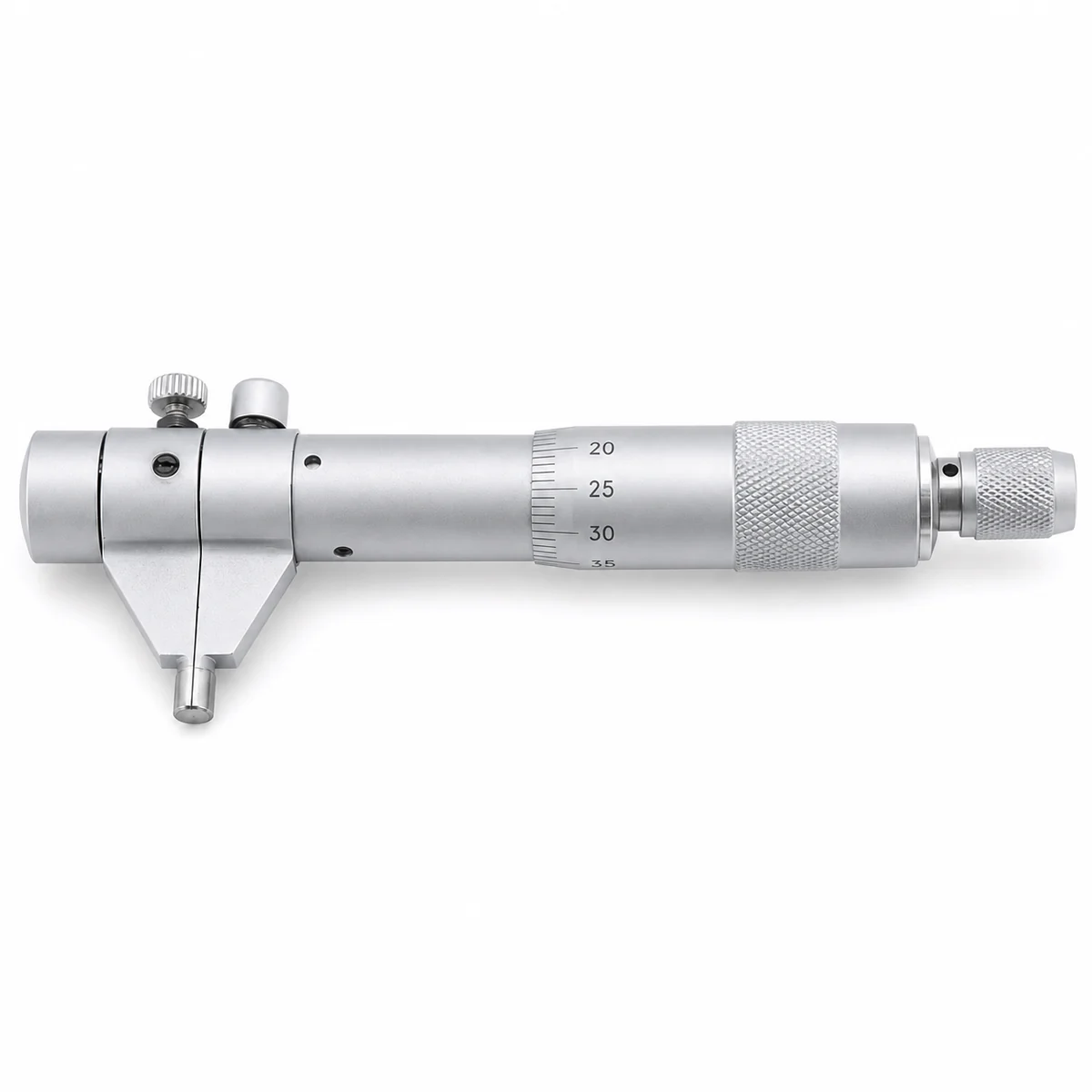
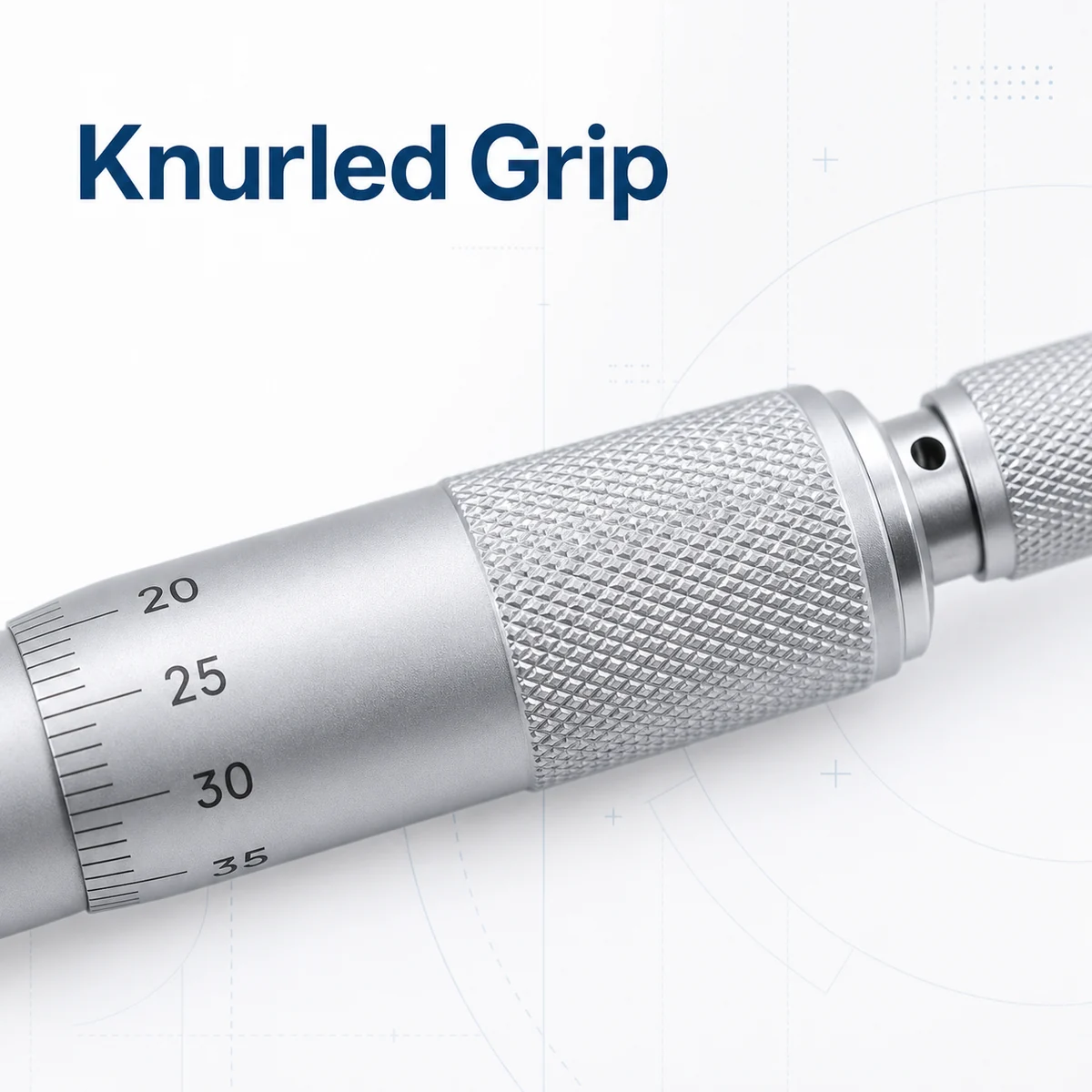
A micrometer (the tool, not the unit) reads directly in both mm and µm on its scales. That's the beauty of it — the conversion from micrometers to mm happens visually on the thimble and sleeve.
I've used plenty of micrometers over the years. Cheap ones, expensive ones, digital ones that cost more than my first car. The Garosa Precision Tool at £44.21 sits in a sweet spot — decent build quality with UK manufacturing behind it, and free delivery sorted.
Step-by-Step Micrometer Reading
Right, here's how you actually read one:
- Sleeve reading: Count the mm marks visible — each line equals 0.5 mm
- Thimble reading: Read where the thimble scale aligns with the datum line — each division equals 0.01 mm (10 µm)
- Vernier scale (if fitted): This gives you the final 0.001 mm (1 µm) resolution
- Add them up: Sleeve + thimble + vernier = your measurement
So if your sleeve shows 5.5 mm, your thimble reads 0.23 mm, and your vernier indicates 0.007 mm, your total reading is 5.737 mm. Converting that to micrometres? Just multiply: 5,737 µm. Spot on.
That's the theory, anyway. In practice, you need to account for measuring force. Too much pressure and you'll compress the workpiece. The ratchet stop exists for a reason. Use it.
Quick Reference: Mm to Micrometers Conversion Table
Here's the table I keep pinned above my workbench. When you need to know how to convert mm to micrometers quickly, this covers the most common values you'll encounter in workshop and laboratory settings., popular across England
| Millimetres (mm) | Micrometres (µm) | Typical Application |
|---|---|---|
| 0.001 | 1 | Optical coating thickness |
| 0.005 | 5 | Semiconductor tolerances |
| 0.01 | 10 | Precision grinding finish |
| 0.025 | 25 | Bearing clearance (minimum) |
| 0.05 | 50 | Paint film thickness |
| 0.1 | 100 | Sheet metal tolerance |
| 0.25 | 250 | Standard machining tolerance |
| 0.5 | 500 | General engineering fit |
| 1.0 | 1,000 | Coarse machining |
| 2.5 | 2,500 | PM2.5 particle diameter |
The micrometers to mm conversion works identically in reverse — just divide by 1,000. If someone tells you a surface finish is 800 µm Ra, that's 0.8 mm. Rough as anything, basically.
How to Use a Colorimeter in Precision Measurement

A colorimeter measures colour precisely and accurately — quantifying what your eye can only estimate. You might wonder what this has to do with mm to micrometer conversions. Fair question.
The connection is coating thickness. When you're applying paint, anodising, or powder coating to a specific micrometre thickness, the colour consistency directly correlates with coating uniformity. A quality colorimeter from Garosa helps verify that your 50 µm (0.05 mm) coating is even across the entire surface.
Colorimeter Operating Steps
Using one isn't complicated:
- Calibrate against the white reference tile (do this every session, not just once)
- Place the aperture flush against your sample surface
- Take the reading — you'll get L*a*b* colour space values
- Compare against your target specification
A Delta E (ΔE) value under 1.0 means the colour difference is imperceptible to the human eye. Between 1.0 and 2.0, only a trained observer notices. Above 3.0? That's a reject in most automotive and aerospace specs.
My mate who does car bodywork swears by his colorimeter for matching paint. And I get why — a 10 µm variation in metallic coat thickness changes the flop angle completely. You can't eyeball that.
How to Use a Drill Guide for Micrometre-Level Accuracy
Can a drill guide really deliver micrometre-level precision? Not quite — but it gets you into the tenths-of-a-millimetre range, which is 100 µm territory. For most workshop applications, that's brilliant.
The Garosa drill guide holds your bit perpendicular to the workpiece, eliminating the wobble that turns a 6.0 mm hole into a 6.3 mm oval. That 0.3 mm error? That's 300 µm of slop. Enough to ruin a dowel joint or make a bearing housing useless.
Getting the Most from Your Drill Guide
Here's what I've learned through trial and error:
- Clamp it properly — hand pressure isn't enough for hardwood or metal
- Use sharp bits — a dull bit wanders regardless of guide quality
- Start slow — let the guide do its job in the first 2-3 mm of penetration
- Check with pins — gauge pins verify your hole diameter to ±0.01 mm (±10 µm)
I know spending money on a drill guide seems unnecessary when you've got steady hands. But steady hands give you maybe ±1 mm accuracy. A guide gives you ±0.1 mm. That's a tenfold improvement — from 1,000 µm error down to 100 µm., with availability in Scotland
Precision Measurement Tools Compared

When you're working in the mm to micrometers range, your choice of measuring tool determines everything. Here's how the main options stack up for June 2026:
| Tool | Resolution | Typical Accuracy | Price Range (UK) | Best For |
|---|---|---|---|---|
| Steel rule | 0.5 mm (500 µm) | ±0.5 mm | £3–£15 | Rough layout work |
| Vernier caliper | 0.02 mm (20 µm) | ±0.03 mm | £15–£80 | General workshop measurement |
| Digital caliper | 0.01 mm (10 µm) | ±0.02 mm | £20–£120 | Quick, repeatable checks |
| Outside micrometer | 0.001 mm (1 µm) | ±0.002 mm | £25–£200 | Precision diameter/thickness |
| Garosa Precision Tool | 0.001 mm (1 µm) | ±0.002 mm | £44.21 | Professional precision work |
| Gauge blocks | 0.0005 mm (0.5 µm) | ±0.001 mm | £80–£500+ | Calibration reference |
The Garosa Precision Tool at £44.21 with free UK delivery represents solid bang for your buck. It's sold to UK customers, which means traceability and quality control aligned with BSI standards. Worth the extra spend over budget imports? In my experience, absolutely.
No single tool covers every scenario, mind you. I'd recommend a digital caliper for quick checks and a micrometer for anything where you need true micrometre resolution. The caliper tells you you're close; the micrometer tells you you're right.
Frequently Asked Questions
How do you convert mm to micrometers?
Multiply the millimetre value by 1,000 to get micrometres. For example, 0.5 mm × 1,000 = 500 µm. This is an exact conversion with no rounding required, as both units sit within the metric system separated by exactly three orders of magnitude. The Garosa Precision Tool (£44.21) reads directly in 0.001 mm increments, giving you micrometre-level data.
What is the difference between accuracy and precision in measurement?
Accuracy means your measurement matches the true value; precision means repeated measurements give consistent results. A tool can be precise but inaccurate — consistently reading 0.05 mm too high, for instance. Quality micrometers achieve both: ±0.002 mm accuracy with repeatability within ±0.001 mm. Calibration against traceable standards ensures accuracy matches precision.
How many micrometers are in 1 mm?
There are exactly 1,000 micrometres in 1 millimetre. This relationship is fixed within the SI metric system. To visualise it: a human hair is approximately 70 µm (0.07 mm), so roughly 14 hair widths placed side by side equal 1 mm. This micrometers to mm conversion factor of 1,000 applies universally across all measurement contexts.
What tools measure in micrometres?
Outside micrometers, inside micrometers, and depth micrometers all read to 0.001 mm (1 µm) resolution. Digital versions display readings directly in either mm or µm. Surface profilometers measure roughness in µm Ra values. The Garosa Precision Tool offers 1 µm resolution at £44.21 with free UK delivery — suitable for professional workshop use.
Why would I need to convert mm to micrometers?
Common scenarios include checking coating thickness specifications (typically 25–75 µm), verifying machining tolerances on precision components, interpreting surface finish callouts on engineering drawings, and working with biological or optical measurements. Many specifications are written in µm while tools display mm, making quick mental conversion essential for quality control work.
Is a micrometer the same as a micrometre?
The word "micrometer" refers to both the unit of measurement (1 µm = 0.001 mm) and the precision measuring tool. Context determines meaning. In UK English, the unit is often spelled "micrometre" to distinguish it from the tool "micrometer." Both the tool and the unit relate to the same scale of measurement — the tool typically resolves to 1 micrometre precision.
Key Takeaways
- The conversion is simple: 1 mm = 1,000 µm. Multiply mm by 1,000 to get micrometres; divide µm by 1,000 to get mm.
- Precision engineering demands micrometre awareness: Tolerances of ±2–10 µm are standard in modern CNC machining as of 2026.
- A quality micrometer reads directly in both units: The Garosa Precision Tool (£44.21, UK-made, free delivery) resolves to 0.001 mm / 1 µm.
- Accuracy and precision are different: You need both for reliable measurement — calibrate tools regularly against traceable standards.
- Drill guides reduce positional error from ~1,000 µm to ~100 µm: A tenfold improvement for hole placement accuracy.
- Colorimeters verify coating uniformity: Colour consistency correlates with micrometre-level thickness evenness across surfaces.
- Always match tool resolution to task requirements: Don't use a steel rule when you need micrometre data, and don't waste time with gauge blocks for rough layout.
Verify your conversions with a dedicated bore micrometer
Free UK delivery · 30-day returns · GAROSA Bore Micrometer £44.21
Shop Now — £44.21