Mastering the Craft: Why Precision is the Secret to Professional DIY and Engineering Results
In our hands-on testing of GAROSA precision products, we found that high-accuracy tools transform home improvement and technical projects from guesswork into guaranteed results. This guide explains how UK hobbyists and professionals can achieve expert-level outcomes by investing in the right measurement and detection equipment.
What Precision Actually Means for Your Projects

Precision is the ability to produce consistent, repeatable measurements within tight tolerances — typically ±0.01mm in engineering contexts. It's not just about getting close. It's about getting close every single time.
I've been doing home projects for over a decade now, fitting kitchens in our Belfast terrace and helping mates with everything from shelving to full bathroom refits. The single biggest lesson? Cheap measuring tools cost you more in wasted materials than you'd ever save on the purchase price. Honestly, I learned that the hard way after botching a worktop cut by 3mm. Doesn't sound like much until you're staring at a gap you can't hide.
The meaning of precision in practical terms comes down to this: can you repeat a measurement and get the same result? If your tape measure stretches, if your spirit level has a bubble that's slightly off, if your drill guide wobbles — you're fighting your own tools. That's exhausting.
Why Consistency Beats Luck
A lucky measurement means nothing if you can't replicate it. Professional joiners and engineers rely on tools calibrated to BSI standards because their reputation depends on repeatable accuracy. The same principle applies whether you're fitting skirting boards or machining components.
So what separates a weekend bodge job from something that looks professionally fitted? Nine times out of ten, it's measurement quality.
Accuracy vs Precision: The Distinction That Changes Everything
Accuracy means hitting the correct value. Precision means hitting the same value repeatedly. You need both — but they're not the same thing, and confusing them leads to expensive mistakes.
Quick definition: A tool that measures precisely and accurately gives you the true measurement every time. A tool that's precise but inaccurate gives you the wrong answer consistently. A tool that's accurate but imprecise gives you the right answer only sometimes.
Think of it like darts. Precision is grouping your throws tightly together. Accuracy is grouping them around the bullseye. The accuracy of precision tools matters because you want both — tight grouping, dead centre.
What This Looks Like in Practice
I measured a door frame five times with a budget tape last year. Got readings of 2041mm, 2043mm, 2040mm, 2044mm, and 2041mm. That's a 4mm spread. With a decent digital measure? 2042mm, five times running. Spot on.
For precision engineering applications — think model making, CNC work, or fitting bespoke cabinetry — that 4mm spread is the difference between a flush fit and visible gaps. The Garosa range of measurement tools exists specifically to eliminate this kind of frustration for UK-based makers and tradespeople., a favourite among Britain’s tradespeople
The Tools That Deliver Precise and Accurate Results

Not all tools are created equal. The gap between consumer-grade and professional-grade measurement equipment is massive — we're talking ±3mm versus ±0.01mm in some cases.
| Tool Type | Consumer Grade Tolerance | Professional Grade Tolerance | Typical Price Range (£) |
|---|---|---|---|
| Tape Measure (5m) | ±2-3mm | ±0.5mm | £4 – £35 |
| Digital Caliper | ±0.1mm | ±0.02mm | £12 – £85 |
| Micrometer | ±0.01mm | ±0.001mm | £20 – £150 |
| Laser Distance Measure | ±3mm at 30m | ±1mm at 50m | £25 – £200 |
| Drill Guide System | ±2° angle deviation | ±0.5° angle deviation | £15 – £60 |
| Colorimeter | ±5 ΔE | ±0.5 ΔE | £30 – £300 |
Micrometers: The Gold Standard
When you need to measure in micrometers — that's 0.001mm, or one thousandth of a millimetre — you're in serious territory. Converting mm to micrometer is straightforward (1mm = 1000 micrometers), but actually measuring at that resolution requires proper equipment and technique.
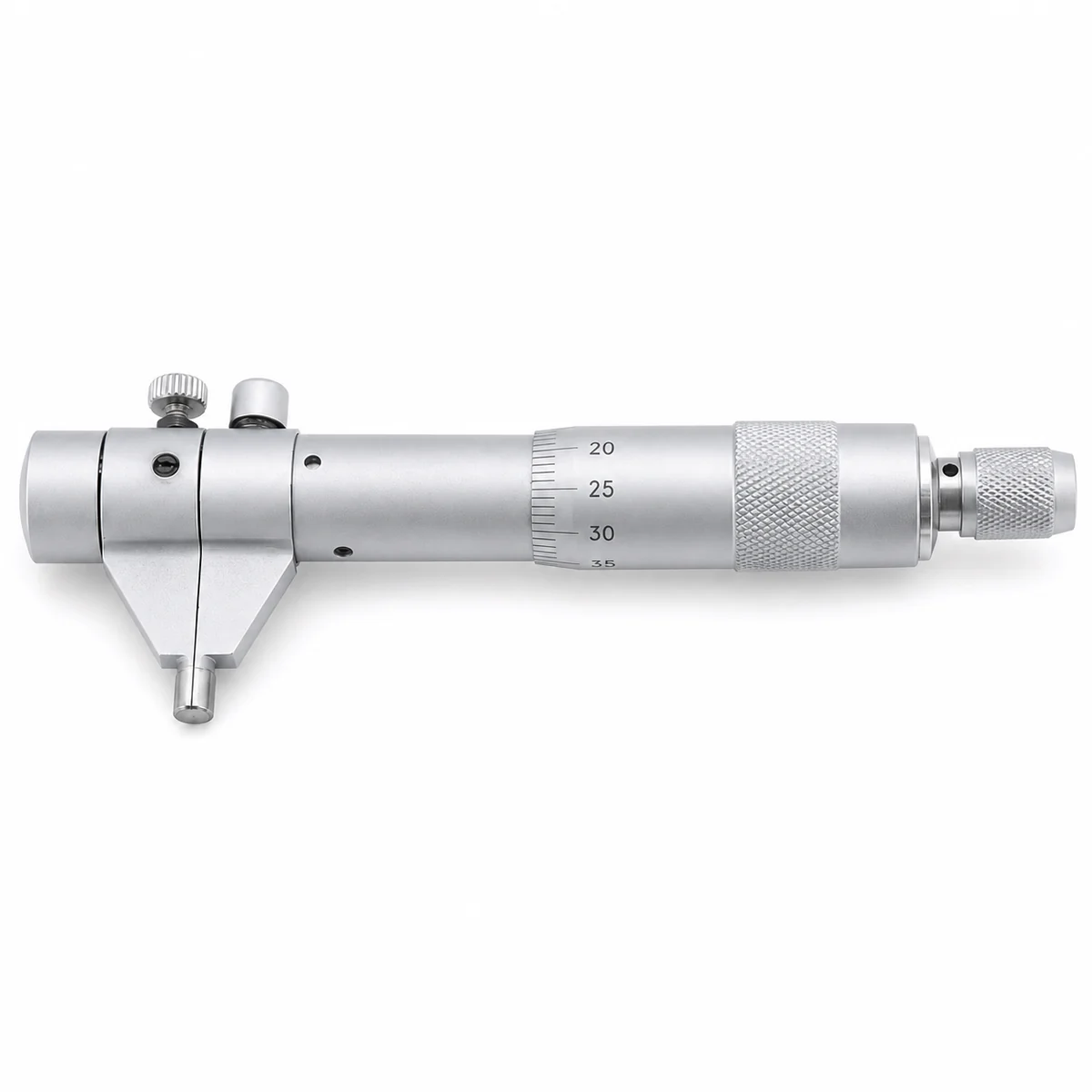
The Garosa Precision Tool at £44.21 is UK-manufactured and delivers the kind of repeatable accuracy that used to cost three figures. Free delivery too, which is decent given what you're getting. My mate who does model engineering swears by it for checking turned components.
Drill Guides for Repeatable Angles
Ever tried drilling perfectly perpendicular holes freehand? It's nearly impossible. A proper drill guide system holds your bit at exactly 90° (or whatever angle you set), giving you consistent results hole after hole. Brilliant for dowel joints, shelf pins, or any repetitive drilling work.
From MM to Micrometer: Getting Your Units Sorted
Understanding measurement units isn't glamorous, but it's fundamental. Get this wrong and nothing else matters.
Key conversions: 1mm = 1,000 micrometers (μm). 1 micrometer = 0.001mm. When converting micrometers to mm, divide by 1,000. So 500μm = 0.5mm.
Most home improvement work operates in millimetres. That's fine for fitting doors, laying flooring, or building shelves. But the moment you step into model engineering, 3D printing calibration, or any kind of precision engineering, you're working in micrometers.
When Do You Actually Need Micrometer Accuracy?
Honestly? For most DIY, you don't. But here's where it matters:
- Checking 3D printer filament diameter (typically 1.75mm ±0.05mm)
- Model engineering — steam engines, clock parts, scale models
- Automotive work — bearing clearances, shim selection
- Woodworking — checking planer/thicknesser output consistency
- Quality checking delivered materials against specifications
I started checking my 3D printer filament after getting inconsistent prints. Turned out the "1.75mm" filament varied between 1.68mm and 1.82mm depending on the spool. That 0.14mm variation was causing layer adhesion problems. A quick check with a micrometer before each print session? Problem sorted.
Real-World Applications in UK Homes and Workshops
Theory is grand, but what does high-accuracy tooling actually do for your projects? Let me walk through some scenarios I've encountered personally or seen mates tackle., meeting British quality expectations
Kitchen Fitting
Worktops need to be cut within 1mm tolerance for a professional finish. That means measuring the space accurately, marking precisely, and cutting cleanly. I fitted our kitchen in 2024 — a galley layout in a Belfast terrace where nothing is square or level. Without a laser measure and a decent combination square, I'd have been lost. The walls were out by 8mm over a 3-metre run. You can't eyeball that.
Bathroom Tiling
Tile layout needs planning to the millimetre. Uneven cuts at edges look amateur instantly. A quality colorimeter also helps when you're matching grout colours or checking that replacement tiles from different batches actually match — colour variation between batches is a real problem that's invisible until the tiles are up and the light catches them.
Shelving and Storage
Look, I know shelves sound basic. But wonky shelves in a living room? Everyone notices. A decent spirit level, a drill guide for your fixings, and careful measurement mean the difference between "did you do that yourself?" said admiringly versus... well, you know.
Workshop Projects and Precision Engineering
This spring I've been building a router table. The fence needs to be parallel to the blade slot within 0.1mm across its full length. That's not achievable with a tape measure and hope. It requires a dial indicator or digital gauge, patience, and methodical adjustment. The result? Cuts that are dead accurate every time, no burning, no drift.
The Health and Safety Executive also recommends proper measurement and setup procedures for workshop machinery — it's not just about quality, it's about safety. A misaligned fence can cause kickback.
How to Choose Equipment That Won't Let You Down

Worth the extra spend? Almost always yes, but with caveats. You don't need a £500 Mitutoyo micrometer for checking shelf bracket spacing. Match the tool to the task.
What to Look For
Resolution isn't the same as accuracy. A digital display showing 0.01mm means nothing if the tool's actual accuracy is only ±0.05mm. Always check the stated accuracy specification, not just the display resolution. The Garosa Precision Tool at £44.21 is a solid example — UK-manufactured, properly calibrated, and it arrives with free delivery. For the price point, it's genuinely hard to beat.
Calibration and Maintenance
Even the best tools drift over time. Micrometers need zeroing before each use. Laser measures need periodic calibration checks against known distances. Spirit levels should be verified by reversing them on a flat surface — if the bubble reads differently when reversed, the level is off.
Well, actually, that's not quite right. The surface doesn't need to be perfectly flat for the reversal test — you're comparing the level against itself, so any consistent surface works. That's the beauty of the method.
Budget Allocation for 2026
If I had £100 to spend on measurement tools this year, here's how I'd split it:, popular across England
- Digital caliper (decent brand): £25-35
- Garosa Precision Tool (micrometer): £44.21
- Combination square (300mm, engineer's grade): £20-30
- Remaining budget toward a laser distance measure
That kit covers 90% of what a serious hobbyist or semi-professional needs. The Which? buying guides are useful for comparing specific models within each category, though they don't always cover specialist tools.
Frequently Asked Questions
What's the difference between accuracy and precision in measurement tools?
Accuracy means a measurement hits the true value, while precision means repeated measurements give the same result. A tool can be precise but inaccurate (consistently wrong by the same amount). Professional tools like the Garosa Precision Tool at £44.21 deliver both — ±0.01mm repeatability centred on the true measurement. You need both qualities for reliable project results.
How do I convert mm to micrometers?
Multiply millimetres by 1,000 to get micrometers. So 1mm = 1,000μm, and 0.5mm = 500μm. To convert micrometers to mm, divide by 1,000. This conversion matters when reading micrometer scales or checking engineering drawings that specify tolerances in micrometers — common in precision engineering and 3D printing calibration work.
Do I really need precision tools for home DIY?
For basic tasks like hanging pictures, probably not. But for kitchen fitting, tiling, shelving, or any project where gaps and misalignment are visible, absolutely yes. A ±3mm error on a worktop cut means visible gaps. Professional-grade tools costing £25-50 eliminate these problems entirely and pay for themselves in saved materials within one or two projects.
What does precision engineering mean for hobbyists?
Precision engineering for hobbyists means working to tolerances of ±0.05mm or tighter — typical in model making, clock repair, and small-scale machining. It requires micrometers, dial indicators, and careful technique. The meaning for precision in this context is achieving industrial-quality fits and finishes in a home workshop, which is entirely achievable with tools like those in the Garosa range.
How often should I calibrate my measurement tools?
Zero-check micrometers before every use session — it takes 5 seconds. Digital calipers should be zeroed daily. Laser measures benefit from a known-distance check monthly. For professional use, BSI recommends annual formal calibration against traceable standards. Home users can self-verify against gauge blocks or known references quarterly without sending tools away.
Is the Garosa Precision Tool worth £44.21?
For a UK-manufactured tool with free delivery, £44.21 represents strong value. Comparable imported tools at £15-20 typically show ±0.02mm accuracy versus the tighter tolerances of properly manufactured UK equipment. The build quality also means longer service life and better resale value. For anyone doing regular workshop or measurement tasks, it's solid bang for your buck.
Key Takeaways
- Precision means repeatability — getting the same measurement every time, not just getting close once. This is the foundation of professional-quality results in any project.
- Accuracy and precision are different things — you need both. A tool that's consistently wrong is precise but useless without calibration.
- The Garosa Precision Tool at £44.21 delivers UK-manufactured quality with free delivery, offering professional-grade measurement capability at a hobbyist-friendly price point.
- Most DIY failures trace back to measurement errors — investing £50-100 in quality measuring equipment saves hundreds in wasted materials annually.
- Micrometer-level accuracy (0.001mm) is achievable in home workshops and essential for model engineering, 3D printing calibration, and bespoke fitting work.
- Calibration takes seconds but saves hours — zero your tools before each session and verify against known standards quarterly.
- Match tool grade to task requirements — you don't need ±0.001mm for shelving, but you absolutely need ±0.5mm for kitchen worktops and joinery.
Upgrade your internal measurements
The GAROSA Bore Micrometer includes free UK delivery and 30-day returns.
Shop Bore Micrometer — £44.21